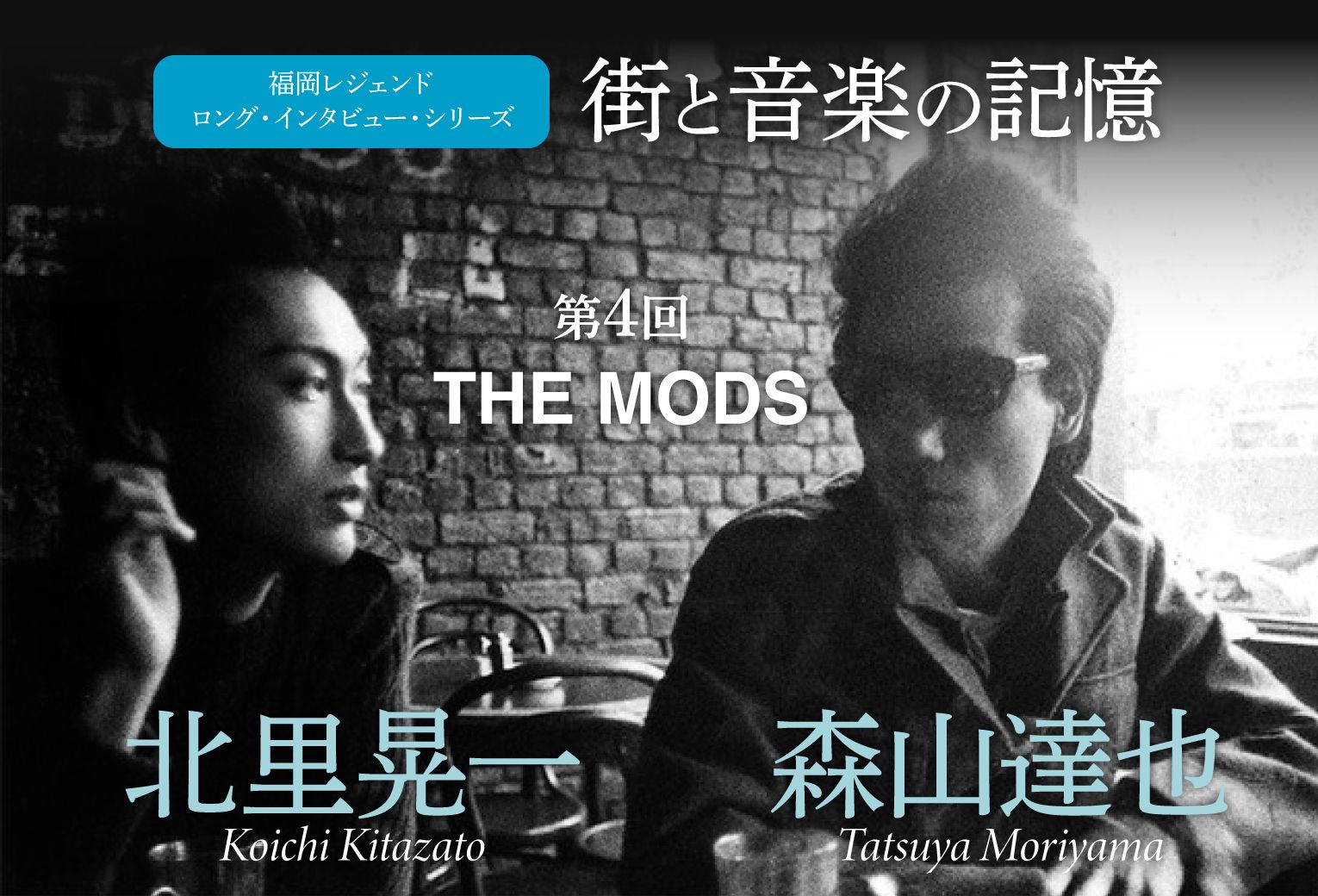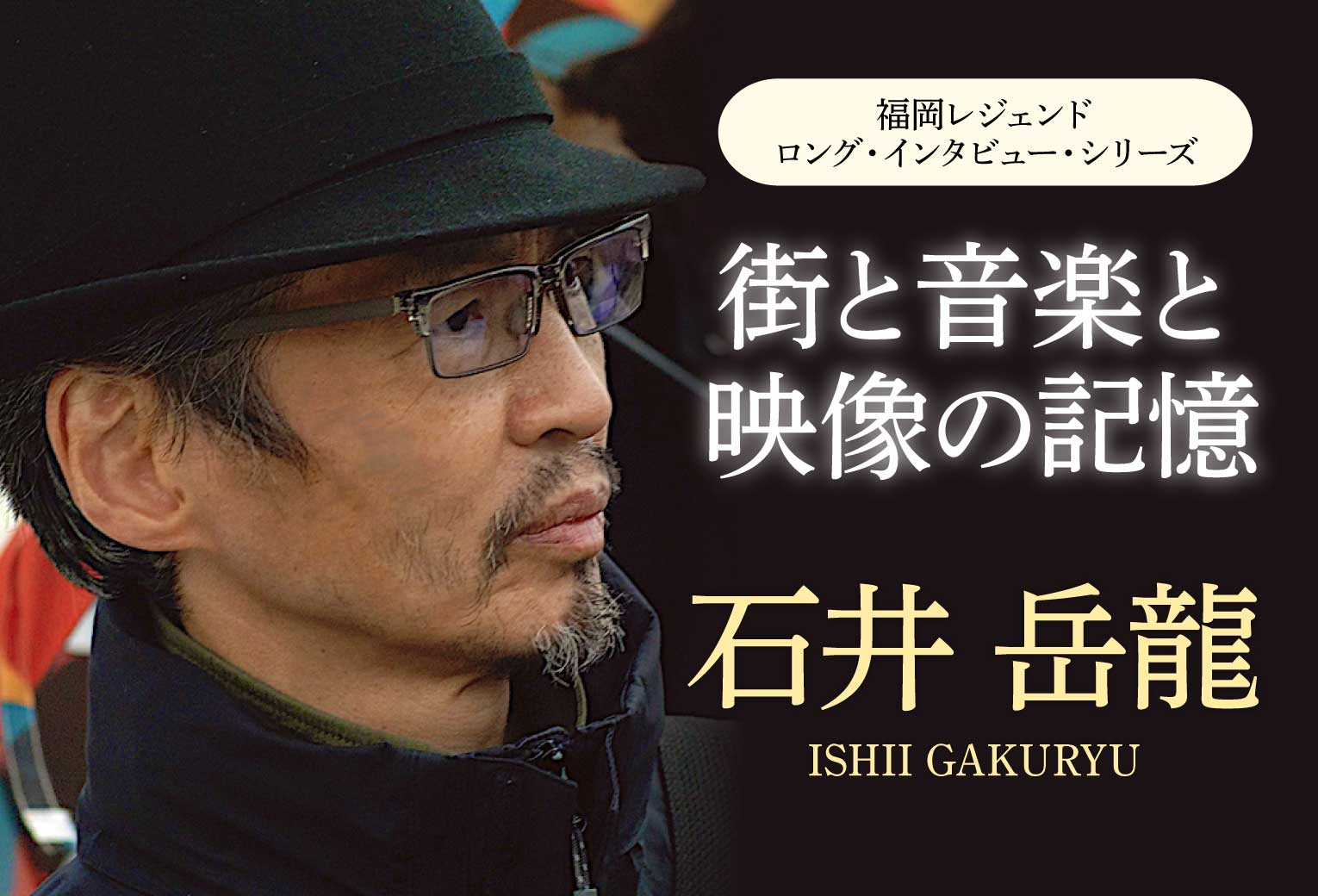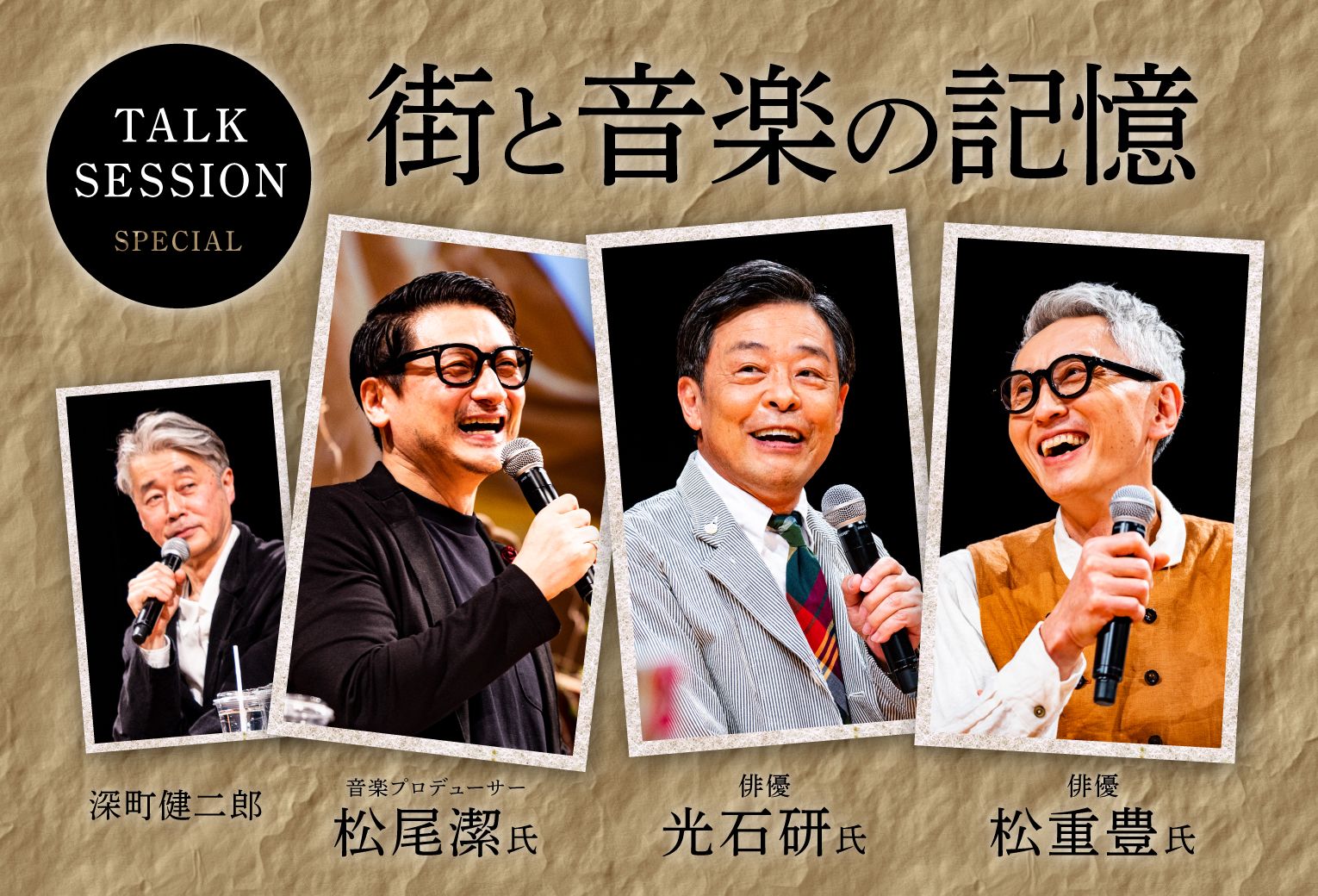

[Fukuoka Legends Long Interview Series] Memories of the City and Music, Vol. 4: THE MODS — Tatsuya Moriyama and Koichi Kitazato


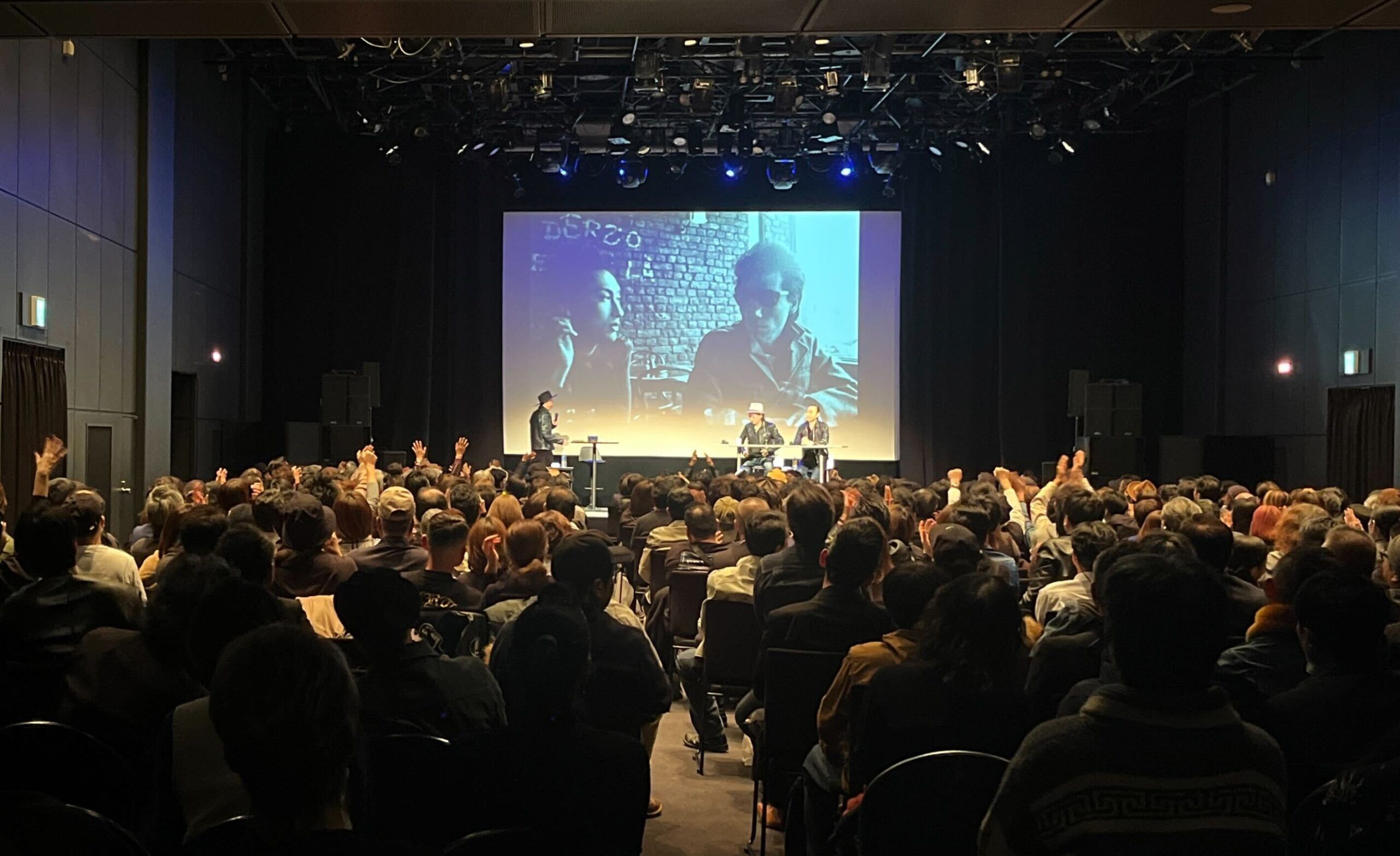
This program collects and examines testimony from the pioneers who made Fukuoka a music city. The fourth installment of the Fukuoka Legends Long Interview Series, “Memories of the City and Music,” spotlights Tatsuya Moriyama and Koichi Kitazato of THE MODS, one of the leading bands of the Mentai Rock scene. Their co-authored book, Hey! Two Punks The Mods: The Early Days — Hakata Gale Edition, published in November 2024, vividly recounts what was happening in Fukuoka and Hakata on the eve of the band’s formation. It is a remarkable work that offers a glimpse into the lives of those passionate souls who simply loved music. This Legends interview presents, in transcript form, the talk held on Wednesday, December 4, 2024, at Fukuoka Toyota Hall Scala Espacio to celebrate the book’s publication.
A special screening of Paradise, directed by Tatsuya Moriyama, is also scheduled for Sunday, January 26, 2025, at Kino Cinema Tenjin. Further details will be announced later. Don’t miss it!
Now, settle in and enjoy the interview in full.

Welcome back, Two Punks! Please welcome Tatsuya Moriyama and Koichi Kitazato of THE MODS!
(Applause)

Thanks! Looks like the audience had a few drinks before coming too.

Moriyan and I started drinking at lunchtime earlier. We may have overdone it a little.

Thank you both for joining us again! Moriyama-san, Kitazato-san, how long has it been since you were last in Hakata?

A little over two years, I think.

How about you, Kitazato-san?

I had various personal matters to take care of, so I came back pretty often.

I think we’re in for a very special evening, with plenty of stories that can only be told here, so thank you all for joining us! Recently, you played an acoustic set for the first time in a while at Tokyo Kinema Club. There were so many moving moments. Everyone was seated because it was an acoustic set, but during the third encore Moriyama-san stood up and the whole place erupted. Let’s begin with your thoughts on that show.

Right. It had been a long time since I’d played a show where I really projected my voice, so they didn’t want to let us leave.

Everyone was incredibly moved!

Well, once I stood up to sing, all the fans stood up too.

During the MC, you said that if there were no problems, you might be able to tour again. How has your hearing been since then? (Moriyama developed sudden sensorineural hearing loss in 2022.)

In the end, the doctor told me I just have to get used to it. If it doesn’t get any worse, I definitely want to do it next year.

Does that mean Hakata is a possibility too?

Of course.

And whether it’s a full-band set or an acoustic set will depend on the situation at the time.

Exactly. I’m still in the rehabilitation stage, and after just one show it’s hard to say anything definite. Starting with an acoustic set may be the safest approach.

Even so, we want to see it.

Sometime next year, at least.

We rehearsed the acoustic set quite thoroughly. I think Moriyan alone suggested close to forty possible songs. There are still plenty we didn’t get to play, and I’d really like to do those too. If we do it again, I’d like to take the acoustic set on tour.

I see. In a way, there’s a different kind of groove, and Moriyama-san’s voice comes through with tremendous force. The acoustic set is wonderful too.

The fans are gradually getting older as well, so maybe they’d rather sit and watch. That’s a perfectly valid way to do it.

I see. That’s something to look forward to. This time you’ve published Hey! Two Punks The Mods: The Early Days — Hakata Gale Edition, a book packed with stories from your Hakata years. I first saw THE MODS in 1978, when I was in high school. It’s an honor to imagine that I’d one day be sitting at the same table talking with you like this.

The honor is ours.

The book contains many stories from that period. The first printing actually sold out, and many people who wanted it couldn’t get a copy. But a reprint has now been confirmed!

That’s right! It should be back on the market from December 23, so please reserve a copy and put our minds at ease. (Laughs)

There’s more good news. Moriyama-san, at last week’s Tokyo show you said that if the book sells, there could be a sequel, right?

Yes. Shinko Music told us that if all 3,000 copies sell, they definitely want us to do another one.

When we spoke backstage earlier, you said there were still many stories you couldn’t fit into the Hakata volume.

There really are many more untold stories.

Maybe we’ll publish them eventually.

That’s what makes today difficult: we shouldn’t give away too much, but at the same time there are stories I really want to ask about. I hope that even people who haven’t read the book yet will want to read it all the more after hearing today’s conversation.

(To the audience) Some of you have already finished it, right?

Weren’t you a little surprised?

It was funny, wasn’t it?

Moriyama-san writes about this in the foreword: THE MODS have a very serious, hard-edged image, don’t they? But this book is packed with so many hilarious stories that the image practically collapses.

Think about it. These are stories from our amateur days in Hakata, before we became professionals. There was nothing hard or stoic about us. We had no money, and there weren’t even shops selling the clothes we wanted. We weren’t interested in politics either. All we thought about was what to eat that night, wanting a drink, and wanting to be popular with women. There was nothing cool about us back then.

But the way you lay everything bare actually felt very rock ’n’ roll to me.

I think it was probably the same for every rock band before its debut, not just THE MODS. We all encountered music in our teens. Musicians who read it will probably relate to that.

What first made you want to publish this book?

Hiroyuki Chisaki goes out on solo tours in the summer, but as you can see, Kitazato here wasn’t doing any work at all. (Laughs)

That’s not true. I post on Instagram every day! That isn’t play anymore—it’s work to me.

Since he could write those Instagram captions, we were having a drink and I said, “Kitazato, why don’t we do something?” A book seemed best. I thought writing would suit him, so I said, “Why don’t you try it?” and he said, “All right, let’s give it a go.” That was how it started.

Did each of you begin writing while recalling your own memories?

At first, Kitazato started writing by himself. Maybe because he’s a bassist, he has a fairly meticulous personality, and he wrote everything in incredible detail. I thought, “Hmm, maybe this isn’t quite right,” and wrote my pieces very briefly. Then we talked about how the tone of a certain book might work.

The book he pointed me to as a model for that tone was, believe it or not, by Koki Mitani. I think it was Only Me. It’s a collection of essays, and it’s very funny—short pieces you can keep reading one after another. I thought that approach could work. Moriyan is quite a bookworm and often recommends things to me: “This is good, give it a read.” It gave me a lot of guidance and really helped when I was writing this book.

You’re both exceptionally talented writers. I read it straight through in about two days because I couldn’t put it down.

The print is large too, so it’s fairly easy to read.

No, no—it’s densely packed with great material. I really want everyone to read it. One thing I wanted to ask about that isn’t in the book is how each of you first encountered music.

I had an older brother, and we shared a room. When he was at the age where he was studying for entrance exams, I’d be half asleep while he listened to the radio. That was what people did back then—they listened to the radio. So I started listening along with him.

How much older is your brother?

Three years older. That’s how I heard the Beatles and the Stones. Fukuoka had FEN back then—the Far East Network. There was a U.S. military base in Fukuoka, and it was the radio service broadcast on the base. Its programs played nothing but Western rock. That’s how I came to like it. I was probably in the later years of elementary school or my first year of junior high.

Was there a particular song that struck you then—one you still remember?

The Animals had a song called “The House of the Rising Sun.” It was incredibly dark, but it really stayed with me. That made me want to hear more of the Animals. Of course, the Beatles came in too, and I thought the intro to the Stones’ “(I Can’t Get No) Satisfaction” was cool. That kind of music gradually found its way into me.

That’s all British beat music.

Exactly. I really came to love British music.

How about you, Keeko-san?

These days I wear a leather jacket like this, but the reason I ever started dressing this way is entirely Moriyan’s bad influence. If we’re talking about how I first encountered music, I think I was in about fourth grade. The girls in my class suddenly started making a fuss. I wondered what it was about, and it was Group Sounds—Kenji Sawada, Julie and The Tigers, The Spiders, bands like that. All the girls were excited, while I only cared about dodgeball and baseball. Then I watched a music show on TV and saw them playing electric guitars, going teke-teke-teke-teke. I thought, “Oh, this is great.” During cleaning time I’d grab a broom and pretend to play.

I did that too!

Of course you did. I tended to use the long broom, so I guess I was already a bassist even then. That was my start. Later I met Moriyan and began listening to British beat, and when the era shifted to punk, I got into it before anyone else.

So it naturally developed into wanting to play the genres you loved yourself.

It began with my brother’s radio and the few wealthy friends around me who liked rock and owned records. Records were hard to buy back then, so I borrowed theirs. They were mostly the Beatles or the Stones. Then I started digging deeper, listening to the originals of songs the Beatles had covered. The more I did that, the more interesting it became.

As the book recounts, in 1974 you first formed “Kaisen Zenya,” more a two-person unit than a band, right?

Yes. We actually had a drummer at first. We rehearsed at the home of the bassist, Takeshi Asada, who later joined Sheena & The Rokkets—Shinaroke from here on. But if you rehearse drums at someone’s house, of course the neighbors get angry. They’re loud. So we wondered what to do and decided to go without drums. The two of us just started playing together. At the time I had absolutely no intention of making a professional debut. You might not even have been able to call us musicians; it was imitation, but that imitation was the beginning.

If you count that, Moriyama-san, this marks fifty years of activity. You say you had no intention of debuting, yet you went to audition at the live music café Showa.

That part is in the book, so I’d like people to read it.

What kind of songs did Kaisen Zenya play?

For example, Cream—Western musicians of extraordinary skill. We tried to work out how to play their music with bass and acoustic guitar. We wrote originals too. Folk was booming at the time, and we were young and wanted to draw an audience. It wasn’t exactly ulterior motives, but we tried some folk as well. I think we played anything that seemed likely to go over well. Those are good memories.

You and Asada-san were classmates at Kego Junior High, right? What amazes me about that school is that Zenjiro Yamabe was one year ahead of you. Further ahead was Tetsu Yamauchi, who joined Faces and later became the bassist for Free. It was extremely rare for a Japanese musician to join a British band. Tatsuya Himeno of Tulip apparently attended Kego Junior High too.

I think I’ve heard that.

You don’t find many junior high schools like that.

That’s true.

Which junior high did you attend, Keeko-san?

Tojin Junior High, around Jigyohama.

Did you have a musical environment around you like Moriyama-san did?

No, it was a pretty dull place.

But it wasn’t the countryside.

No, though it was on the edge of Chuo Ward.

Moriyama-san then formed MOZZ—the so-called first incarnation of THE MODS—with Kazuhide Kawashima, who later joined Shinaroke, on drums and Hisashi Shirahama, later of ARB, on guitar. This was a proper band lineup.

Finally a band, yes. As I wrote in the book, everyone had a strong personality.

Was it already British beat music?

Well, when I was in my third year of junior high or first year of high school, there was Woodstock—the huge outdoor rock festival held in the United States in August 1969 and made into a film the following year.

The festival was in 1969, and the film came out in 1970, I think.

The film arrived here. I went to see it and, for the first time, saw The Who actually moving and performing.

There was no MTV on television back then, of course, and you almost never got to see bands perform.

It made such an impact on me that I took photographs of the movie screen.

I understand. When I was in fourth grade, I secretly photographed a Beatles movie too.

I think that was what made us decide to try playing The Who.

I see. That was a legendary performance, wasn’t it?

Exactly. It wasn’t live, but being able to see musicians moving was fantastic.

And you immediately started covering their songs.

We did.

That’s why we were mods. “Mods” originally referred to the youth movement that emerged in Britain in the 1960s. They favored African American music such as R&B and jazz and wore slim black suits.

Right. We worked backward through the era and decided to play in a mod style.

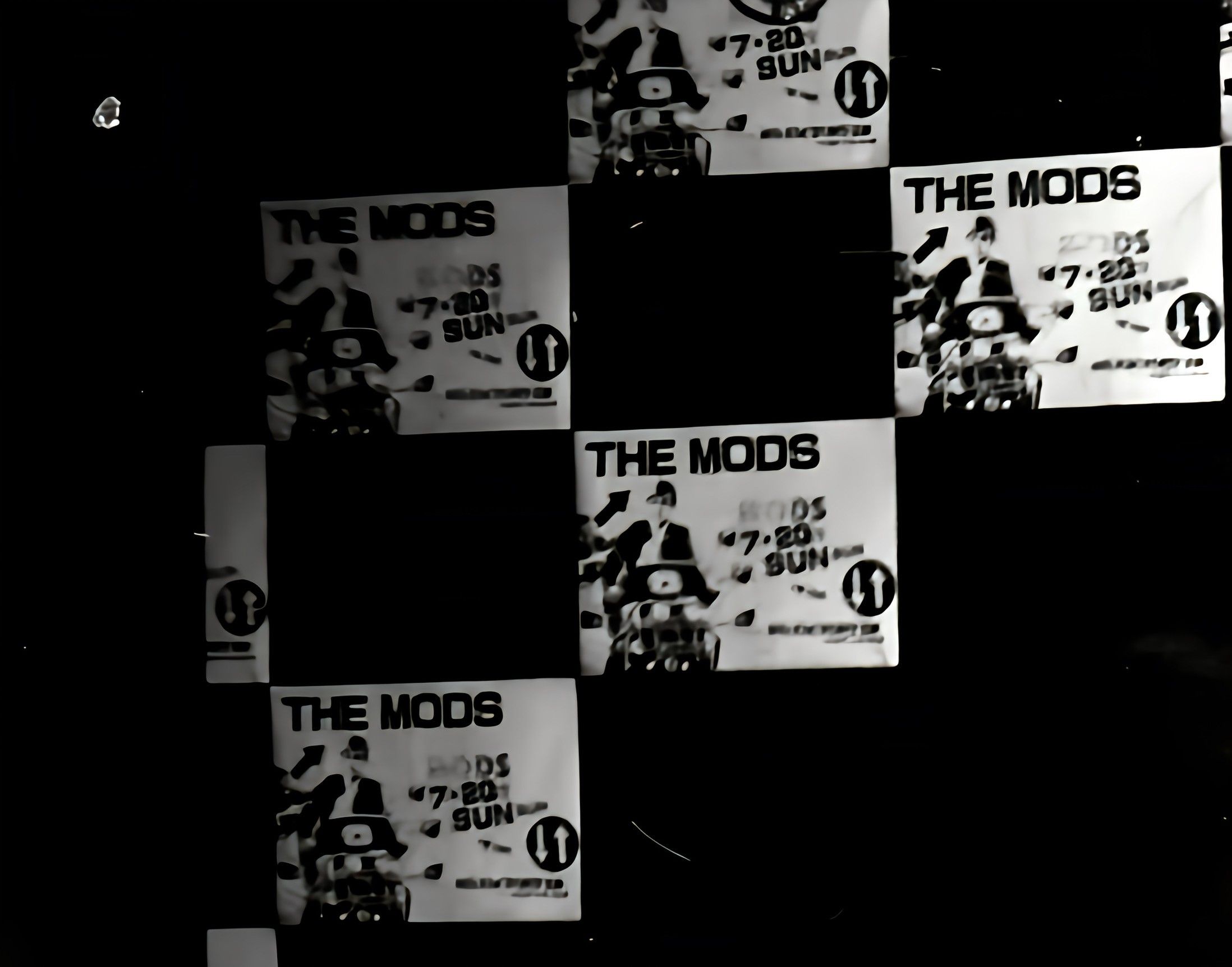
A concert poster displayed at 80’s FACTORY. The influence of the mod movement is evident. Circa 1980.

I see. It might seem that things would continue that way, but while the lineup was still unsettled, you met Keeko-san. Did you already know MOZZ, Keeko-san?

I was a huge fan. I’d be lying if I said I never missed a show, but I saw almost all of them.

Were you playing in a band yourself?

At the time I was in a corny band called Shooting Star. Takashi Jinnai was the singer.

How did the two of you come to decide to play together?

Whenever we played a show, he was always hanging around nearby—with that look in his eyes. (Laughs)

Keeko-san was scary. He had this piercing stare.

That’s how I came to remember him. Then I noticed he was even at the after-parties after our shows.

I was an uninvited guest, but I’d casually join them for a drink.

I remembered that he played bass, and I’d gone to see his band once. MOZZ broke up after about a year, so I asked our manager at the time whether he knew any bassists. Then I remembered: “That guy with the mean look played bass, didn’t he?” So we thought we’d ask him.

That episode is in the book too. But you didn’t simply join—Keeko-san misunderstood what was happening, in a way.

Yes, that story is in the book as well.

Something I learned for the first time from this book is that both of you worked in house bands—bands employed by venues to play live for customers. That surprised me.

They were house bands at discos and similar places, where live musicians played for people to dance. DJs began appearing toward the end. Hiring a band must have cost more, and as the world changed, house bands themselves became less common. Kitazato and I may have been among the last.

You did that work too, Keeko-san.

I think we were the last generation.

It must have been a demanding environment. You had to respond to audience requests, play songs you didn’t want to play, and sometimes people didn’t even listen. Looking back, though, weren’t there a great many musicians in that era who developed their skills through that experience? I have a similar image of Sonhouse.

That was fairly normal for everyone back then.

A little like the Beatles in Hamburg: playing several sets night after night and steadily getting better. Was it that kind of era?

There were quite a lot of people doing it.

There were. To be frank, house bands paid fairly well. Musicians want good instruments—Fenders and Gibsons, for example. They cost amounts you could never easily earn from an ordinary part-time job.

My house-band job paid poorly. Kitazato’s place was rougher, so maybe it paid more?

Moriyan’s venue still played fairly Western, disco-like music. Mine was a full-on cabaret house band, so we played enka and standards. It really was a shabby place on the outskirts.

Moriyama-san’s history surprised me too—Suginoi Palace in Oita, for example. I thought, “Really?”

If I say any more, I’ll give it away, so please read the book. (Laughs)

Please do read it. Kenichi Urata, the original drummer of Sonhouse and someone closely connected to both of you, wrote in his autobiography ROLL: Hakata Nobose Bandman Graffiti that Sonhouse began playing originals and blues partway through its career and then drove every venue it played out of business. I found that story fascinating. There was a strict seniority system among Hakata musicians, and Urata-san was a very senior figure to both of you, wasn’t he?

Sonhouse was one of the local bands we admired—if not exactly heroes. Almost no overseas artists came to Fukuoka in those days, so it meant a lot to have a genuinely cool band close at hand.

Did they have a strong influence on you?

Of course. I went to their shows all the time. Urata-san was the band’s original drummer, and partly because of his personality, he was a little frightening.

He’s funny, but he is scary. (Laughs)

The first time Moriyan said, “Kitazato, I’m taking you to see Urata-san today,” people called him Ishioka-san rather than Urata-san at the time. Moriyan said, “I’m taking you to Ishioka-san’s place,” and I thought, “What?” I didn’t really want to go, but I went along. Back then I wore pointed shoes, and I worried whether showing up in shoes like that would be disrespectful. The moment the door opened, I stood bolt upright and said, “Excuse me!” That’s how strict the hierarchy was.

And Moriyama-san became the vocalist in Urata-san’s band with no room for argument.

No room for argument at all.

It’s an incredible story, but you did join them.

MOZZ had just ended, and it’s true that I wanted to become a better singer. The band had Urata-san and the Shirai brothers—Tetsuya, or Tecchan, and Toshiya, or Toshichan.

The brothers behind Shiraingata—the music venue Shiraingata on Watanabe-dori.

It was a house band, and the experience taught me an enormous amount. It may have been the first place where I truly grew. It was quite hard, but looking back, I’m glad I did it.

You learned by watching your seniors.

Moriyan’s singing key—meaning his vocal range—rose from A to C during that period. Raising your key like that is remarkable.

They’d say, “Sing the song in its original key!” I thought, “There’s no way I can reach that.” Everyone has their own range, but I kept working and gradually went from A to B and then C. It soon went back to A, though. (Laughs)

From what I heard, a house band played several sets every day. During the breaks, he spent the whole time facing a wall and practicing his voice: “Ahhh!” Moriyan wasn’t the only one being drilled. Tetsuya and Toshiya Shirai practiced click, click, click in front of a metronome too.

The fundamentals are important. I’ve heard that Urata-san’s drumsticks often came flying from behind.

Rather than flying at me, they were stabbing me. (Laughs)

Looking back, perhaps those experiences helped make you what you are now.

I think it was a valuable experience.

We came to take it for granted, but what was remarkable then was that with the professional band Sonhouse based in Hakata, everyone played original songs. THE MODS wrote originals, The Rockers did too—everyone did it as a matter of course. This was before CDs, and even cassettes were hardly being sold.

That’s right.

I loved THE MODS’ songs so much then that I wanted something I could keep. I listened to things like THE MODS demo tapes copied from copies several generations removed, and tapes of live recordings circulated from the clubs. Why didn’t you sell anything yourselves? Was it simply not that kind of era?

It wasn’t that kind of era.

The very idea of an “indie scene” didn’t exist yet, and there were no distribution channels for it.

You already had many great songs then, including plenty of classics that still haven’t been released, if you ask me.

I suppose there are a few. Maybe we could release them before we break up.

Please do! The scene later called “Mentai Rock” developed after this. It began with Sonhouse, followed by THE MODS with their focus on British beat. Looking back, I feel that music found nowhere else existed only in Hakata during that era, with nothing quite like it before or since. American rock and hard rock were generally popular in Western music then, but Hakata’s punk scene was completely different. So many people gravitated toward British beat and pub rock. Why did Hakata alone develop that way?

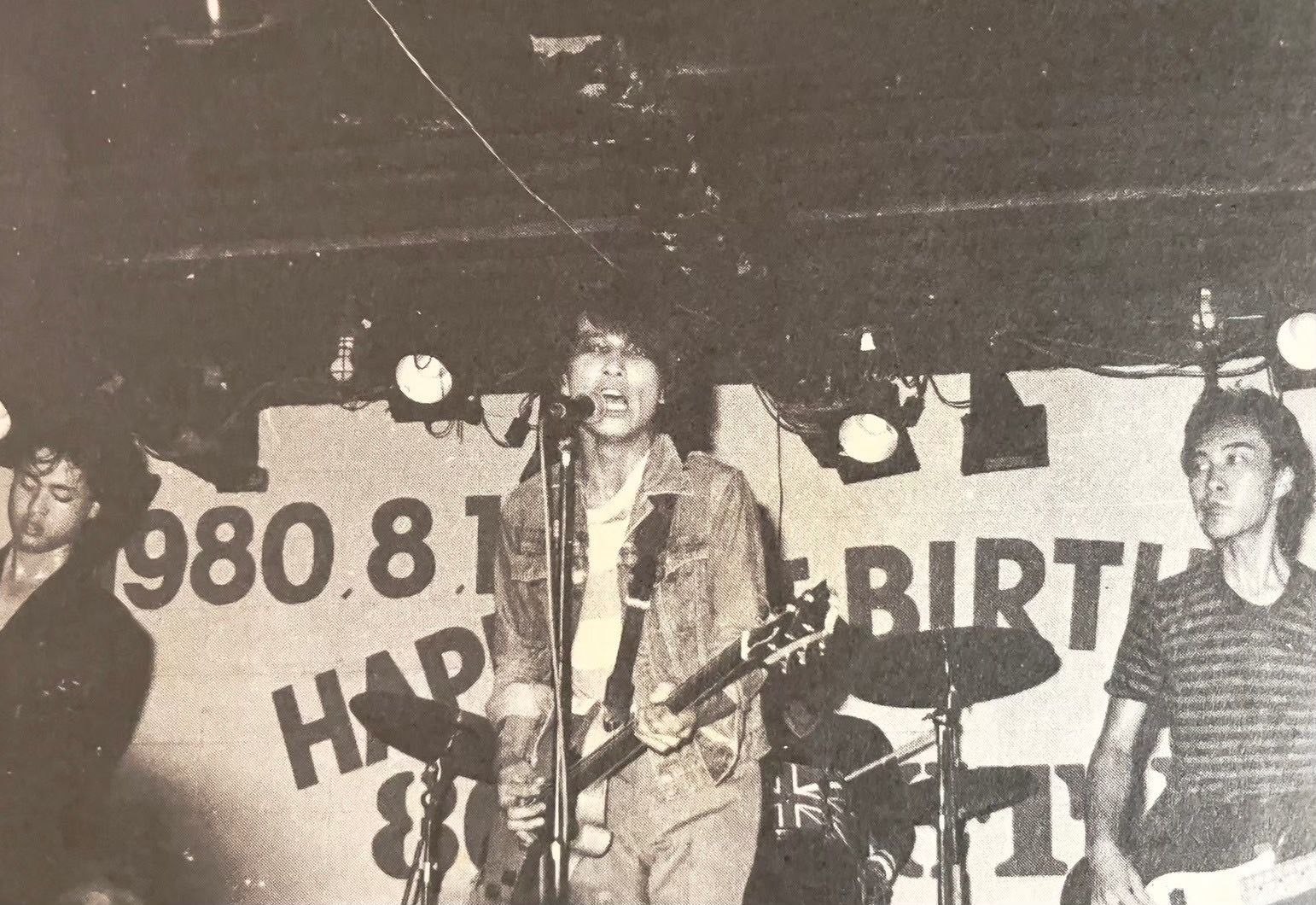
From the July 1982 issue of Blue Jug magazine

You can ask me that, but I honestly have no idea.

One thing we can say is that it was an era with very little information. There was no internet, of course, and no rock-oriented programs.

So when we found something we liked, we pursued it deeply. Bands weren’t following trends, and we didn’t care much about what was popular in Tokyo. As it happened, Sonhouse, Breakdown Engine, and bands like them were nearby, writing and performing original songs. Many of those bands had a British sound, so we naturally moved in that direction too. It was an organic progression.

There weren’t many record stores where you could buy The Yardbirds. You had to go to Juke Records, search, and buy them there. Juke was an important presence for Hakata musicians, wasn’t it?

Yes, I think it was very important. If you went there, you could discover good records. Yasushi Matsumoto was there—he has passed away now—and I trusted that any record meeting his standards would be worth buying.

True to the name “Juke,” it was almost like a music juku—a school.

Yamabe-san and others would also go to Nippon Gakki, the instrument and record store on the first floor of the Fukuoka Building at the time, and ask members of Sonhouse, “What should I listen to?” Knowledge flowed down through that hierarchy.

There was a positive side to the seniority system. With so little information available, people learned from the musicians ahead of them.

It wasn’t quite a rock ’n’ roll high school, but in Fukuoka, after school meant rock ’n’ roll!

Moriyama-san, THE MODS organized an event called History of British Beat. It brought together not only your own band but The Rockers and newer groups of the time. Seventeen included Hiroyuki Chisaki, who later joined THE MODS after Modern Dolls. By gathering those bands at Showa, previously known mainly for folk music, didn’t you create a new movement and influence many people?

When I found a band I liked, I wanted to give them any opportunity I could to play before an audience. I gathered several bands, pleaded with the chief at Showa, and that’s how the event began.

Aside from house-band work, your only part-time job was at a record shop in Kasugabaru, wasn’t it?

There was a record store called Disk Jack, and I worked there for quite a while.

Was that also a way of discovering material?

It sounds strange to say I could listen to music for free, but that was a wonderful part of it. When there were no customers, I listened to whatever I liked every day, and new releases arrived before anywhere else. In the end, I was the one paying money on payday because I bought more records than I earned. (Laughs)

Could you share just this story with everyone—the exchange you had with a customer while working at the record shop? (Laughs)

That one? It’s only a little anecdote and hardly related to the main story. The person involved may even be here today. He’s a younger friend, and he went to the record shop where Moriyan worked to buy Hiromi Ota’s huge hit “Momen no Handkerchief.” He asked, “Excuse me, do you have Hiromi Ota’s ‘Momen no Handkerchief’?” Moriyan answered with just one line: “We don’t carry that sort of thing.” (Laughs)

Later I asked Moriyan, “Did you really not have it?” When he searched properly, it was there. Of course it was—it was a massive hit. But there’s an epilogue. We had a female manager, and the two of us attended her wedding. And who should be seated next to us but Hiromi Ota! (Laughs)

(Laughs) What an incredible coincidence.

I kept my head down the entire time and couldn’t make eye contact. (Laughs)

By the late 1970s, the punk movement was emerging in Britain. While relatively few people in Japan had yet been influenced by it, Hakata seemed to respond early. Yamabe-san rapidly transformed from Inakamono into Drill, and both Moriyama-san and Keeko-san underwent a kind of initiation into punk. What was that experience like?

Absolutely. Just before punk, a wave called pub rock arose in Britain. Dr. Feelgood looked just like us—slim ties and that whole appearance. We thought, “They look like a Hakata band.” They were playing songs like “Route 66,” also covered by the Rolling Stones and a standard for bands good at straight eight-beat rhythms. We felt there was no difference between Britain and us, as if to say, “See, we weren’t wrong.” Then punk arrived. At first we didn’t really understand it; all we had were photographs and imported books. Gradually we learned about it as a culture rather than only as music. Magazines like Playboy ran stories about what was happening with punk in London, and we felt we absolutely had to hear it someday. That was how we became absorbed in it.

Everything visibly changed—the fashion shifted completely from long hair and bell-bottoms. The book contains many stories tied to that situation, and the two of you got into quite a bit of trouble.

It was less that we were deliberately reckless and more that the times forced us to become that way.

What’s funny is that neither of you basically held a part-time job.

Not a regular job, no. If someone tells you to report for work every day of the week, you can’t keep a band going.

That may be part of why you became full-time bandmen.

Exactly.

It couldn’t be helped. Neither of us has ever been formally employed. We’ve never received that kind of salary. Moriyan once told me there was just one thing he wanted to experience: an office romance.

Moriyama-san, is that true!?

Think of Iwataya in Hakata. When you walk inside, it smells wonderful—from the cosmetics and everything else.

There was a radio satellite studio there too.

I smoked then, so when I went to an area like the smoking room, it was full of employees, men and women. I’d think, “I suppose romances are born in places like this.” Then I realized I’d never had an office job, so I’d never had anything like an office romance.

That story isn’t in the book at all, is it?

I forgot about it. (Laughs)

Even though you had no money, your days basically revolved around alcohol and yakitori.

We ate a lot of it.

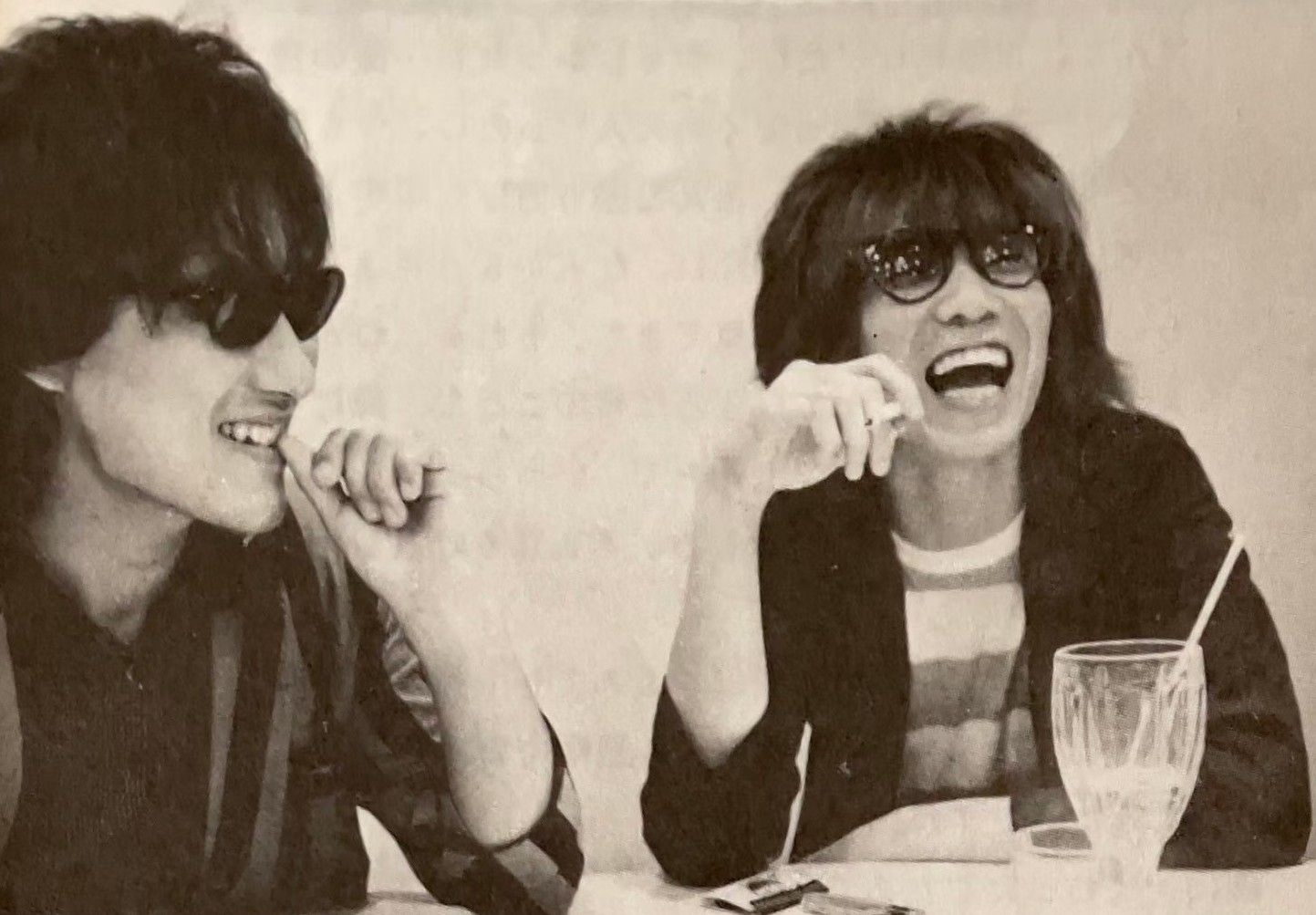
From the August 1979 issue of Blue Jug magazine

Well, we went straight to a bar again yesterday.

Like the song: even with nothing but small change in your pockets, you still go.

Right. We wrote about that part in the book, so I can’t say much, but yesterday confirmed it for me once again: bara and shiro skewers. They’re our soul food! As long as I have those two, I can live forever.

You can’t get them in Tokyo, can you?

No.

When it comes to food, I really do envy people in Fukuoka.

You can’t get them in Tokyo. Why not move back to Fukuoka now? At this point, you don’t have to stay in Tokyo. If people want to hear THE MODS, tell them to come here—if you love THE MODS, come to Hakata! (The audience stirs.)

With computers and everything now, I don’t think it would be impossible. I’ll consider it.

I think it would be wonderful. A new music scene might emerge from here again.

But Tenjin has gradually changed. All the places we used to visit have gone out of business or closed. That makes me a little sad.

That’s why there are things I don’t want to change. One Hakata example is Kokinchan, which you love, Moriyama-san.

Kokinchan too. There’s always a line now, so I haven’t managed to eat there lately.

I haven’t managed to get a seat there in ages.

It’s practically impossible to get in now, even for locals. But together with the punk scene, the two of you were living lives straight out of films like Quadrophenia and Trainspotting. As we discussed, Hakata had the scene later called Mentai Rock, which gave rise to distinctive music. In Britain, Liverpool had the Beatles and Merseybeat, while Manchester had Madchester. Hakata isn’t a very large city, but Liverpool has only around half a million people, and Manchester isn’t enormous either. Yet those places produced singular music, so perhaps they share something. That’s why the Hakata era you described is so fascinating: young people with an unchanging spirit gathered closely together and played rock. You didn’t really find that in Tokyo, did you?

The difficulty with Tokyo is asking, “What does ‘Tokyo-like’ even mean?” A regional identity is probably clearer and easier to recognize as cool. Tokyo is complicated.

It doesn’t have a distinctive character. You could say anything goes.

Whatever is currently fashionable tends to be treated as best.

I often think that about fashion too. Tokyo is standardized. People from Hakata sometimes have their own individual sense of style, and you notice that something is different.

Do you still feel that in Fukuoka today?

I’m not sure about recently, but it was very obvious a few years ago.

A city with character is a wonderful thing.

I like it. The Hakata dialect is an identity that hasn’t changed since our time.

Everyone spoke Hakata dialect.

But once people picked up a microphone, they’d think about trying to speak in a Tokyo accent.

When we debuted, we had to do interviews. For some reason I was always the one sent. At first I didn’t know how to speak in a Tokyo style, so I spoke entirely in Hakata dialect, and the interviewer would look at me like, “What?”

They couldn’t understand what you were saying.

Exactly. Then I’d be stuck and have to say everything again. Eventually I’d switch to very formal language: “It is such-and-such,” or “I did such-and-such.” I gradually started sounding like Ken Takakura. Back then it was difficult to work out a more relaxed form of polite speech that wasn’t quite a Tokyo accent.

THE MODS still retained a strong Hakata character even after moving to Tokyo.

On stage, Moriyan’s phrase “Gokigen desu ka?”—“Are you well?”—is actually very polite. He never says something casual like “Gokigen kai?” It has a plain, sturdy quality. I like how clean and direct it feels.

Alongside that taciturn quality, Hakata also produced many wildly unconventional characters. Zenjiro Yamabe—Yamazen—appears several times in the book. He and Moriyama-san were close in that sense, weren’t they? Yamabe-san was the first street musician I ever saw. He was singing on the street in the 1970s, which astonished me.

I doubt anyone who liked or played rock in those days didn’t know Yamazen.

You and Moriyama-san had many encounters too.

He was my senior at junior high school, after all.

Did you watch Yamabe-san perform?

Even before that, Yamazen was the cheering squad captain at a school sports festival. He stood out tremendously, and we thought, “Wow, that team looks fun.” He was already something of a school celebrity, with a very distinctive personality.

You have many stories involving Yamabe-san.

I do. Once, while I was staying at a hotel in Tokyo, the front desk called and said a man named Jack wanted to contact Mr. Moriyama. I thought, “I don’t know anyone called Jack.” Then I asked, “Does he have short hair, sunglasses, and something like a large eye patch?” They said yes. “Ah, I understand. I’ll come down now.”

Yamazen’s catchphrase at the time was “Fearless and shameless.” That phrase alone tells you what kind of person he was.

Then in 1978, THE MODS finally won L-Motion, Yamaha’s competition for amateur musicians in Kyushu.

Yes. The sequence of events before we won L-Motion is quite funny. I really want people to read that part.

Makoto Ayukawa was one of the judges, right? It appears in the book: when Moriyama-san asked, “Why were we able to win?” Ayukawa-san gave a wonderfully characteristic, very cool reply. It gave me chills. After winning L-Motion, did you receive any offers to debut?

No, we didn’t.

Nothing. Any phone call about making a record would have gone to Moriyan, so that’s what I heard from him.

I don’t think there was anything.

That itself is remarkable.

I really don’t think there was.

Incidentally, we won with a song called “Atsui Kiss.” It was a good song, so it wouldn’t have been surprising if an offer had come.

The prize was a synthesizer. You sold it and used the money to go out for yakitori again.

That’s generally how it went.

In other words, nothing went smoothly; you weren’t going to debut easily. Around then, 80’s Factory opened beside Nagahama Park. It was Fukuoka’s first full-scale live music club, operating from August 1979 until the end of March 1982. It became something of a sacred place for the Mentai Rock scene, and THE MODS effectively made it their base.

What was so wonderful when that club opened was that there had been no venue where audiences could stand during shows.

I’ve heard THE MODS were the first—the first live shows to introduce the concept of a standing audience.

It simply wasn’t that kind of era. For us, having a venue like that felt incredibly exciting: “This place is cool.” Emi-chan, the manager at 80’s, was a very bold and forthright person. She really liked us, and I’m truly grateful to her.

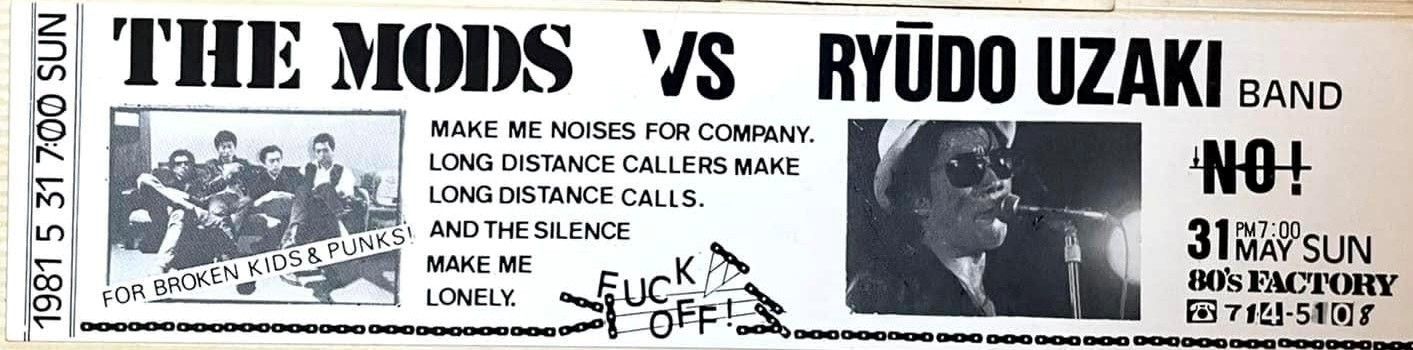
A ticket from 80’s FACTORY, for a show immediately before the major-label debut on May 31, 1981. From the collection of Naoto Motonaga.

I saw THE MODS there many times, and the final show apparently broke the attendance record.

So I’ve heard.

It’s a shame the venue existed for such a short time.

It really is.

There was also your participation in the soundtrack for Gakuryu Ishii’s film Crazy Thunder Road, released in 1980. THE MODS were effectively broken up at the time, but I understand that project became the catalyst that brought together the lineup for the later debut.

That was the first time Hiroyuki Chisaki and Masahiro Kajiura played together.

Right. More precisely, they made a demo.

It seems that demo circulated among music-industry people in Tokyo, alerting them that THE MODS were in Hakata.

Apparently so.

That’s the accepted story. On a personal note, I organized the Fukuoka Music Film Festival last year. We screened Crazy Thunder Road again, invited Director Ishii, and received a comment from Moriyama-san. Let me introduce it again: “I want to thank Director Gakuryu Ishii for creating such a rock ’n’ roll work in that era. The recordings we made for its soundtrack circulated in Tokyo, and that became the catalyst for the THE MODS of today. I want people to feel these rock ’n’ roll images and sounds.”

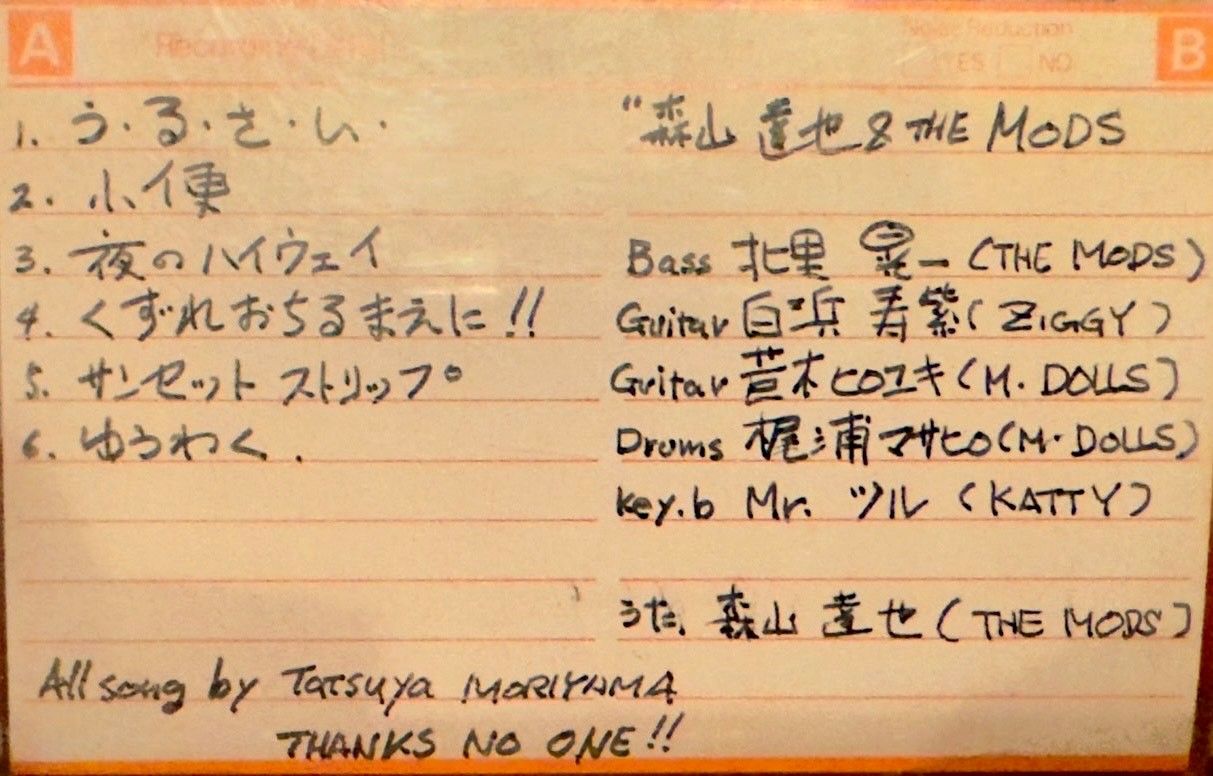
“Sunset Strip,” which played in the venue as people entered today, was from that soundtrack.

A cassette containing songs recorded for the Crazy Thunder Road soundtrack, probably copied from the master. The tape circulated in Tokyo and led to the band’s professional debut. The credits are handwritten by the members.

Before your debut, you also appeared almost every week on TVK’s Fighting 80’s, an audience-participation public recording program broadcast by Television Kanagawa.

Yes, almost as regulars. We were still amateurs, but the program helped us a lot. A TVK director named Toshiyuki Sumitomo knew the president of our management company at the time. He promoted us by saying, “There’s this interesting band,” and they asked whether we wanted to become regulars.

Almost everyone else appearing was already a professional.

Right. Ryudo Uzaki was the host. He talked to us about many things and was a genuinely kind person.

He was. He even lent us a Rickenbacker guitar and said, “You can use this.” Did you return it?

I returned it. I did return that one.

You can understand why I’d worry. He had a habit of keeping things he borrowed.

Even I returned that.

What makes this book so interesting is that it reveals the origins behind THE MODS songs everyone knows—you realize, “So that incident became that song.” Two Punks also contains a story almost like a true episode: an opportunity close to a debut arrives, but then falls through.

Right. That’s an important part, so I can’t discuss it. We kept getting close without quite making it. There were also companies we didn’t want to sign with.

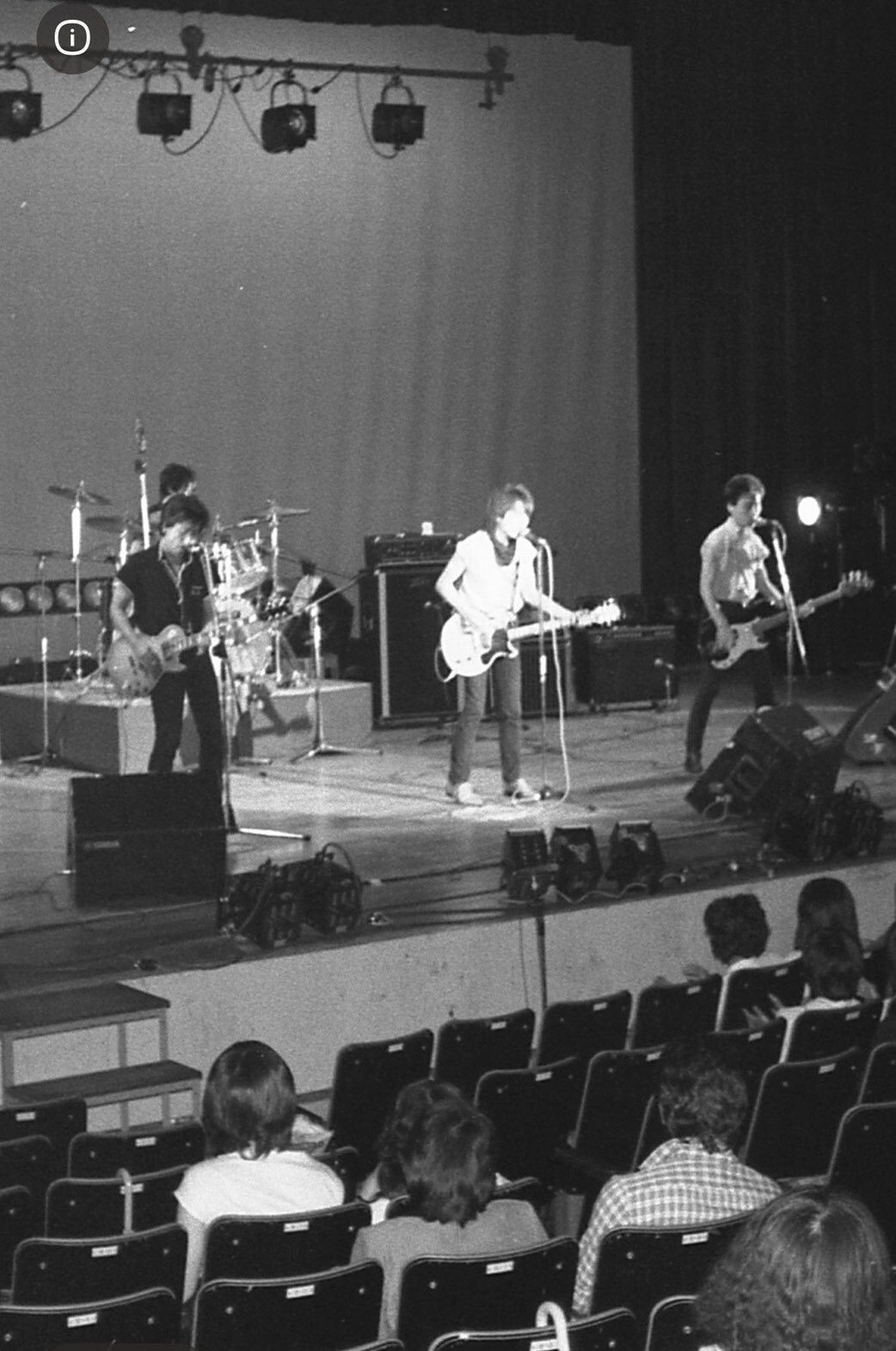
THE MODS performing at Jumping Jam 80 on July 11, 1980, at the Fukuoka Youth Science and Culture Center.

Exactly. The book describes it all very candidly, so please read that part carefully. Time has passed so quickly. There is still so much I’d like to ask. The opening of the book includes a dedication to Makoto Ayukawa, Sheena, Yasushi Matsumoto of Juke Records, Hiroshi Kaida of Lennon, and Hirofumi Katagiri of EPIC Sony. Were Ayukawa-san and Sheena particularly important figures for you, Moriyama-san?

I respected them as senior local musicians. The drummer and bassist from the first incarnation of THE MODS later joined Sheena & The Rokkets, and they were a band we always watched with interest. When Sheena & The Rokkets first returned to Hakata, Kitazato and I put up the posters ourselves.

Really!?

In the middle of the night. We wanted to finish quickly, so we put them on the walls of people’s houses and received a flood of complaints. (Laughs)

What was Sheena like?

As I wrote in the book, she wasn’t exactly a mother figure, but...

She was an incredibly open and friendly person.

Almost like an older sister.

Exactly. She was very caring.

It’s sad that people who were involved with THE MODS in those ways have passed away. We need to keep talking about them and pass their stories on.

We dedicated the book to them because we never really stood face-to-face with those people and said, “Thank you.” So when an opportunity like this comes along, I think it is extremely important to write, “We dedicate this book to you.” That’s my serious answer.

Hey! Two Punks really feels like it could become a television drama or a film.

Is there a sponsor with money out there? Convince KudoKan—Kankuro Kudo.

KudoKan contributed the message on the book’s obi too.

Or we could crowdfund it.

I’m delighted that the book allows us to learn the story of THE MODS’ Hakata years. These are the kinds of stories that could otherwise gradually be forgotten.

When we started writing, the two of us discussed these things over drinks. We’d try to recall episodes—“That happened back then, didn’t it?” We’re older now, but more importantly, we were drinking during almost everything that happened, so many memories are hazy. We realized that if we left it any longer, in a few years we might not remember at all. We felt we had to write it down while we still could.

I’m glad you did.

We just managed to do it in time. We couldn’t recall everything neatly, but when we discussed fragments of memory together, they somehow connected into a single line. One of us would say, “That’s right, that’s right,” and from there the whole scene would come back vividly.

Next we have a segment introducing music that influenced each of you. For today’s special version, we asked you to list what you listened to in your youth, when you first became absorbed in music. Let’s begin with the Kitazato selection. You chose four songs.

Please go ahead.

First is Aerosmith with “Mama Kin.”

This was February 1977. We didn’t actually like what people called hard rock. Those long guitar solos did nothing for us. But I dragged Moriyan to Kyuden Memorial Gymnasium, and he ended up liking them.

Do you remember, Moriyama-san?

I do. I thought this was a good song, though I wasn’t so sure about the clothes. Later I came to appreciate what an incredible band Aerosmith were. When I recently heard that a fractured skull had forced the singer to retire from touring, I was truly sad. What a loss—he is a remarkable singer.

Aerosmith was a slightly unexpected first choice from you, Keeko-san.

They were one of my favorite bands in high school. But this was 1977, when the Sex Pistols appeared. Once punk arrived, I suddenly hated Aerosmith. (Laughs)

I see. Let’s move to the next song: the famous band Carol, with “Louisiana.” Its beat connects to the early Beatles too.

Absolutely. Carol in this period were at their best. They were so cool.

And Eikichi Yazawa’s bass playing too.

That’s rock ’n’ roll.

They have remained beloved for a long time.

One of Carol’s staff members from that period later became the president of our first management company.

The connections all come together in the end.

I saw Yazawa just once. We were at the U.S. Embassy to get visas before going to shoot a promotional video for “Muhomono no Uta.” Back then you had to line up for a visa. A man in a white suit was arguing with an official. He said, “You know, I have a house in L.A.,” and the official’s attitude was basically, “So what?” I thought, “Isn’t that Yazawa?” He was tall and slender, in a white suit, and I think he was wearing a hat like this. Moriyan was behind me in line, so I called, “Moriyan! Moriyan! That’s Yazawa!” He marched straight over and said, “Don’t say that, you fool!”

I was telling you not to point at people! (Laughs)

Everyone else received visas for a week or longer. Mine was only for two days.

Why?

My bank balance. Back then, to get a visa, you had to bring a bankbook proving you had enough money for the trip. Mine contained only 23 yen.

Twenty-three yen makes the story painfully real.

...

That’s the punk spirit.

It’s actually quite cool. Let’s move to the next song.

All right.

Elvis Costello & The Attractions with the classic “Alison.”

The Attractions didn’t exist yet when the song was recorded, so this video of them performing it is extremely valuable. It also has this gorgeous four-piece brass section.

I actually discovered this song through THE MODS. Moriyama-san used to sing it often.

We played it.

I thought it was an exceptionally good song, and then learned it was Costello.

Costello is an extraordinarily talented person.

The connection to THE MODS isn’t immediately obvious. What drew you to him?

When his first album came out, I went to Juke Records and saw the cover. I thought, “Oh, Mako-chan—Makoto Ayukawa—has released a solo record.”

They did resemble each other.

Looking more closely, I realized it was someone else. I bought it, listened, and thought it was cool. It wasn’t simply punkish; the melodies were solid. That quality made it clear he was no ordinary musician.

There are elements that feel like an extension of pub rock, and he was connected to Nick Lowe.

Exactly. Hakata bands like us weren’t only punk. We had many different tools: slow songs and ballads too.

It wasn’t only beat music and punk.

As you can tell from Moriyan, he’s a vocalist who can both sing and dance.

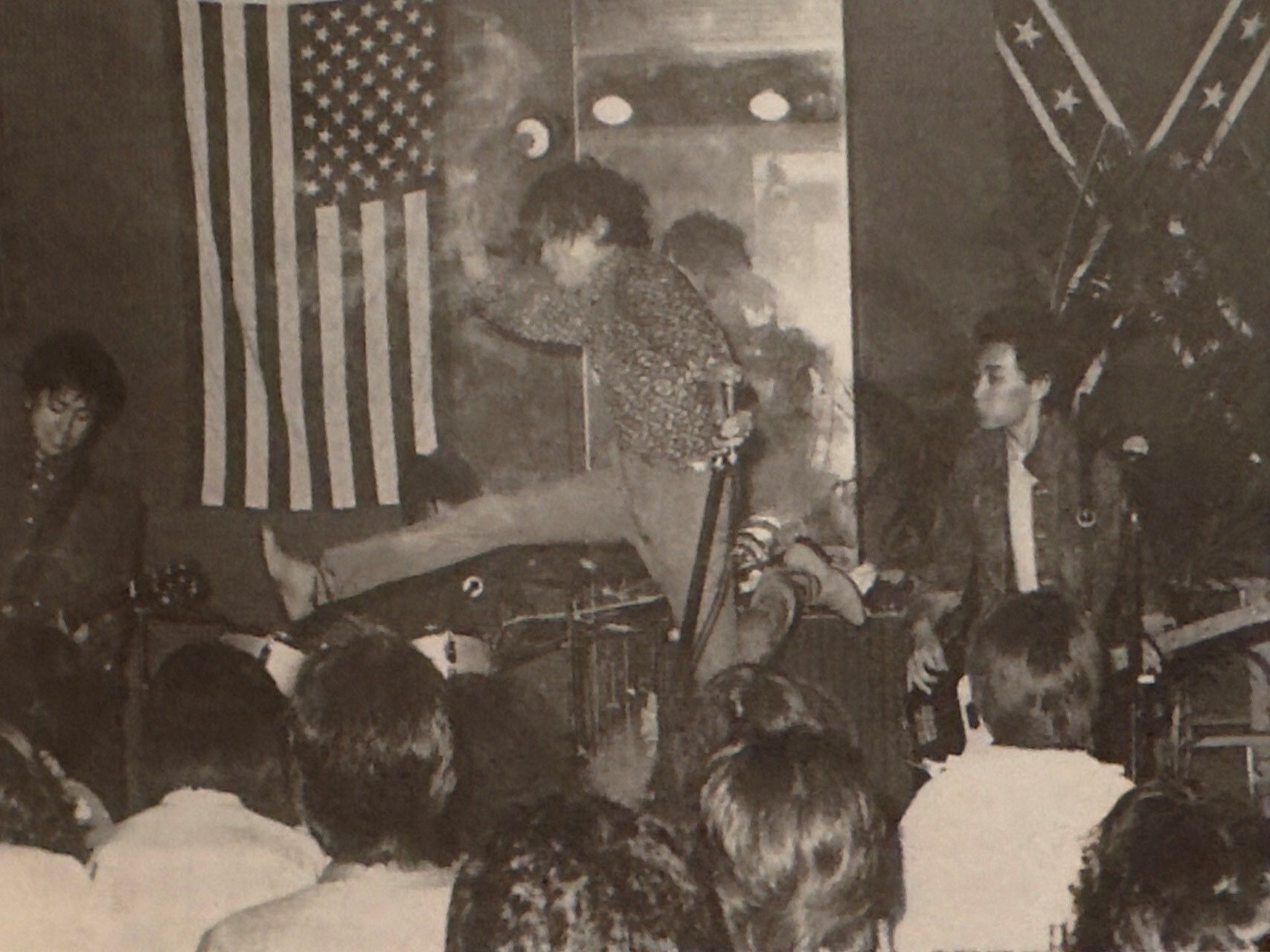
From the July 1982 issue of Blue Jug magazine, at the live music club Tamu.

That is fascinating too. Can we hear one more from the Kitazato selection? Yamabe-san has appeared, Keeko-san. The song is “GOOD BYE MAMA.”

I wanted everyone to see the footage.

In a way, Yamabe-san also had the qualities of a solo singer.

That’s what is frustrating: despite all the wild things he did, he could write a song this good. Perhaps this is something we should write about in the sequel.

I see. Yes, that makes sense.

Everyone wants to hear it, so go ahead.

Then I’ll say just a little. THE MODS had planned to cover this song. The rest will be in the sequel.

I see. We’ll wait for the sequel.

The mysterious guitarist on the right is Kozo Soga, a senior of mine.

Soga-san has passed away too.

From cancer. I once played bass in a band with him.

Didn’t Soga audition for THE MODS once?

I don’t remember. Perhaps that was before I joined.

It may have happened.

I have a faint memory of it.

Shall we move on to the Moriyama selection?

Yes, let’s. This is the one we discussed earlier—seeing The Who moving on a cinema screen.

The Who with “See Me, Feel Me,” the song that struck the young Moriyama deeply.

Young Moriyama was astonished. I thought they were incredibly cool. Roger Daltrey, the singer, swung his microphone around, so I immediately decided to try it. I did—but our stages were very small then.

And the ceilings were low.

The microphone cable tangled around the guitarist’s neck and everything became a disaster. That’s how much I loved them, though.

In your early days, Moriyama-san, you didn’t play guitar. You were purely the vocalist.

Exactly.

Moriyan would swing the microphone around and around like a cowboy. Naturally the microphones broke, so live music clubs didn’t want to lend him one.

I had to buy my own microphone, but I didn’t have that kind of money. (Laughs)

Next in the Moriyama selection is...

Rod Stewart’s “I Don’t Want to Talk About It.” I hadn’t realized how loudly the audience screamed for him. I was already singing this during my house-band days.

It’s a classic.

It truly is. Rod also had an album called Atlantic Crossing. I personally preferred Faces, but I often covered songs from Atlantic Crossing.

Really? It’s a great album.

People came to dance. Everyone in Smiler—the band I played in with Urata-san and the Shirai brothers—loved Rod Stewart. I sang six or seven of his songs in a single day. But you can’t memorize that much English in one day, so they got extremely angry with me for singing made-up words.

Memorizing the lyrics must have been difficult.

When I improvised, they’d say, “What are you doing, singing with your jaw?”—they strictly corrected me for faking the English lyrics. You remember that well. Personally, I truly loved this song.

You also covered “Everything But the Girl.”

When Moriyan was young, he didn’t wear Ray-Ban sunglasses like he does now, and his hairstyle was cool. I wanted to imitate it, but my hair is soft and fine, so it wouldn’t stand up at all. I went to sleep with it tied up in rubber bands.

Getting it to stand must have been difficult. That was some heroic effort.

But when I woke up and removed the rubber bands, it would just flop down again.

Moriyama-san looked cool. The style really suited you.

I loved it. Best Hit USA, the music program broadcast by TV Asahi, had just begun airing in Hakata. When I learned Rod would appear, I called my mother and father over. I dressed strangely in those days, so I told them, “I’ll show you why I dress like this.” After they watched, they gave me an incredibly cold look. I should never have shown them. (Laughs)

Moriyama-san taught us what “cool” meant in those days. Let’s go to the next song.

Sonhouse with “Milk Nomi Ningyo.” Like Carol, this is rock ’n’ roll! It had a tremendous influence on us.

It’s like tracing the music back to its roots.

It still sounds incredible today.

The performance is unbelievably fast.

Mako-chan is razor-sharp too.

Absolutely. And so is the drumming by Onihei—Shinichi Sakata.

It’s great. Most Hakata bands of that era were influenced by them. The Roosters from Kitakyushu were undoubtedly influenced too.

The connections continue. They were intimidating seniors—“ezui,” as we say in Hakata.

Very ezui. They had reptilian faces.

People used to say I had a reptilian face too.

Really?

When people said “reptilian face,” they meant someone like Harry from The Street Sliders—or me.

You didn’t have the kind of presence that tried to flatter anyone. One more song, Moriyama-san: Dr. Feelgood with “She Does It Right.”

Watch his picking hand—he isn’t using a pick.

He’s using his fingers.

He plays with his fingers. How can he produce that much drive? It’s an unusual picking style and truly impressive.

This is pub rock in its purest form. That’s who they were.

I think most Hakata bands back then loved and played this kind of straight eight-beat rhythm.

Without question. You covered it too, didn’t you?

We did, toward the end of the MOZZ period.

So it was that early.

It doesn’t sound especially fast now, but back then it felt like, “That’s fast!” I remember struggling with it.

The Roosters covered it too. It connects to so many Fukuoka bands.

For that era, yes.

Since it’s “pub” rock, perhaps it has an inherent connection to bars. The image of alcohol is strong.

Definitely.

Faces and alcohol too. (Laughs)

Apparently one of their tours was terribly received because they performed while drinking.

The Stones have come to Fukuoka, of course. When Ron Wood visited Hakata as a visual artist, I accompanied him, and he drank Guinness—the Irish stout—continuously from the middle of the day. (Laughs)

These days, we make a point of not drinking on stage. I’m sure many people here have been drinking today, though.

And yesterday.

Yesterday, while we were drinking, the bar played The Yardbirds and then The Kinks. You only find that in Hakata.

I was amazed!

Perhaps they selected the music for you. We didn’t have enough time today, but Moriyama-san had also chosen The Kinks, while Keeko-san chose The Damned. We had to cut them for time, and now we need to bring the event to a close.

Thank you so much to all four hundred people who came today.

Thank you very much.

Finally, may I ask each of you to say a few words to everyone?

I’ll go first. I want to sincerely thank everyone who has already bought the book. The reprint comes out on December 23, so please wait just a little longer. Personally, I still need to continue my rehabilitation, but I hope we can play live sometime next year—I don’t know which month yet. Please come and see us again.

We’re looking forward to it. Keeko-san, please go ahead.

Thank you for coming. It finally seems that THE MODS can see signs of Moriyan returning to the stage. I need to make sure I don’t turn around and damage my own health now, so I’ll take proper care of myself. Please come and see us again. Thank you very much.

Keeko-san, your eyes have become much gentler.

Have they?

In the old footage, they were very ezui—intimidating. (Laughs) Thanks to both of you, today was a thoroughly enjoyable time. Once again, our guests were Tatsuya Moriyama and Koichi Kitazato of THE MODS. Thank you very much!

Date: Wednesday, December 4, 2024
Venue: Fukuoka Toyota Hall Scala Espacio
Edited by Naoto Motonaga and the Fukuoka Music City Council Secretariat